Beyond the Billion-Parameter Arms Race
For years, the narrative in artificial intelligence has been dominated by scale—more parameters, larger datasets, and ever-increasing computational budgets. This race towards massive, centralized models created a significant gap. For most organizations, especially in the dynamic and diverse Asia-Pacific (APAC) region, the costs, infrastructure demands, and privacy implications of deploying these behemoths were simply prohibitive. Data scientists found themselves stuck in a form of capability purgatory, aware of transformative technology but unable to harness it practically within their constraints.
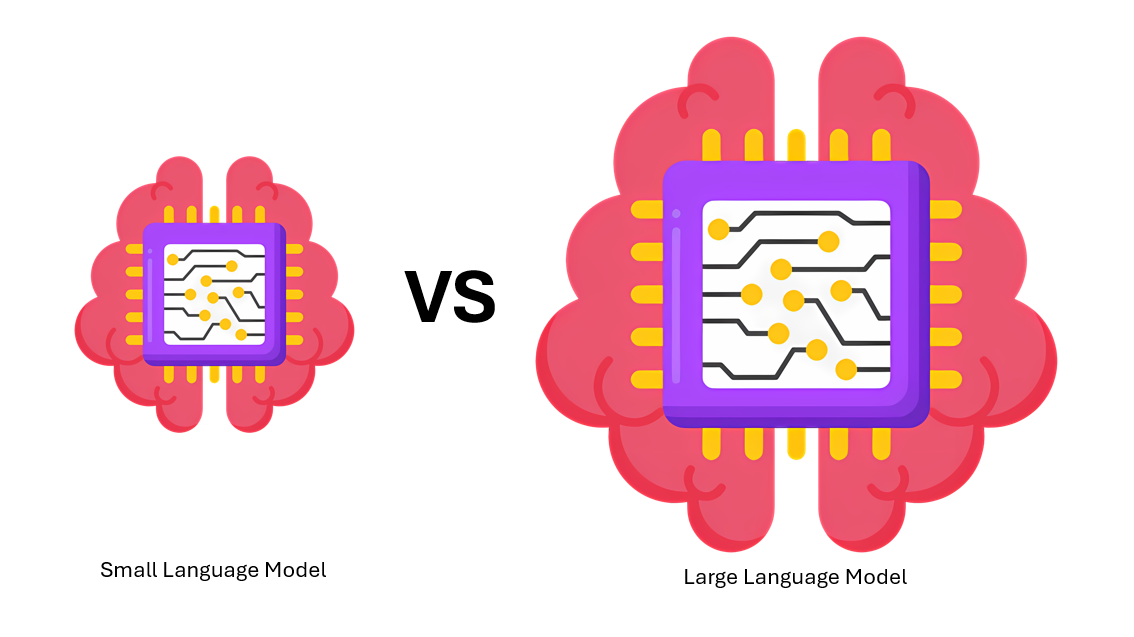
A pivotal shift is now underway. The AI community’s focus is moving from raw size to remarkable efficiency, heralding the era of Small Language Models (SLMs). These compact, often sub-10-billion parameter models, combined with a flourishing open-source ecosystem, are democratizing AI. For APAC data scientists—particularly in hubs like Hong Kong, Singapore, and Bangalore—this shift isn’t just a technical trend; it’s a strategic unlock. It opens the door to building cost-effective, privacy-conscious, and hyper-localized AI applications that were previously unimaginable. This article explores this new landscape and outlines how regional teams can lead the charge.
The Compelling Case for Small Language Models
SLMs like Microsoft’s Phi-3, Google’s Gemma, and Mistral AI’s offerings are proving that big things can come in small packages. Their rise is driven by several key advantages that resonate deeply with APAC’s needs:
- The Efficiency Imperative: SLMs require a fraction of the computational power for training and inference. They can run effectively on a single consumer-grade GPU or even on modern laptops, drastically lowering the barrier to entry for experimentation and deployment. This makes advanced AI feasible for startups, university labs, and enterprise departments without cloud-scale budgets.
- Privacy and Sovereignty by Design: Processing data locally—on a device or within a private on-premise server—is a paramount concern across APAC, where data protection regulations like China’s PIPL and Hong Kong’s PDPO are strictly enforced. SLMs enable edge AI, where sensitive data never leaves its source, ensuring compliance and building user trust.
- Specialization Over Generalization: While a 700B-parameter model tries to know everything about everything, a 7B-parameter model can be finely tuned to excel at one specific thing. For APAC’s multitude of languages, dialects, and unique business verticals, this is a game-changer. An SLM can be expertly tuned for Thai legal document analysis, Vietnamese customer sentiment, or Cantonese-English financial reporting with startling accuracy.
- The Open-Source Advantage: The most exciting SLMs are overwhelmingly open-source. This allows for complete transparency, customization, and avoidance of vendor lock-in. For data scientists, this means the freedom to dissect, modify, and optimize models for their exact use case.
The APAC Advantage: A Thriving Open-Source Ecosystem
While Silicon Valley giants dominated the first wave of large models, APAC—and China in particular—has emerged as a powerhouse in the open-source and efficient AI wave. This creates a unique opportunity for regional data scientists to work with models that are culturally and linguistically more attuned to local contexts.
Leading models from the region include:
- Qwen (Alibaba): The Qwen family, including the potent Qwen-2.5 series, offers state-of-the-art performance in both English and Chinese, with strong multilingual capabilities across Japanese, Korean, and more. Its permissive license and excellent tool-use support make it ideal for commercial applications.
- DeepSeek (DeepSeek-AI): Known for its exceptional reasoning capabilities and long-context support, the DeepSeek series is a top contender for complex analytical tasks. Its recent open-weight releases have been met with widespread acclaim in the developer community.
- Yi (01.AI): The Yi series has consistently punched above its weight class, rivaling the performance of models twice its size. It’s a favorite for its balance of capability, efficiency, and developer-friendly design.
These models are not just academic exercises; they are backed by serious research institutions and tech firms, come with extensive documentation in Chinese and English, and have vibrant communities for support. For a Hong Kong team building an application for the Greater Bay Area, starting with Qwen or DeepSeek is a more context-aware choice than a generic Western model.
Strategic Pathways for Hong Kong and APAC Teams
So, how can data scientists in Hong Kong and the wider region translate this technological shift into tangible opportunity? Here are three strategic pathways:
- Championing Edge AI and On-Device Intelligence
The future of consumer and industrial applications is at the edge. SLMs are the key to unlocking it.
- Opportunity: Develop intelligent mobile apps that offer sophisticated language features—personalized tutoring, real-time translation of regional dialects, or confidential health assistants—that work entirely offline. In manufacturing, deploy SLMs on ruggedized devices for real-time quality control analysis or predictive maintenance without streaming sensitive operational data to the cloud.
- Technical Stack: Leverage frameworks like Llama.cpp or Ollama for efficient local inference. Utilize advanced quantization techniques (e.g., converting model weights to 4-bit precision) to shrink models further without major performance loss, making them ideal for smartphones and IoT devices.
- Building Privacy-First Enterprise Solutions
In sectors like finance, healthcare, and legal services, data privacy is non-negotiable.
- Opportunity: Build internal “AI co-pilots” that help analysts draft reports, summarize confidential client meetings, or review legal contracts. Because the SLM runs on the company’s own secure servers, sensitive client data remains completely internal, satisfying both regulatory compliance and client confidentiality agreements.
- Technical Stack: Deploy SLMs within a secure Docker or Kubernetes environment on-premise. Use Retrieval-Augmented Generation (RAG) to connect the SLM to the company’s private knowledge base (e.g., past case files, internal manuals) without needing to retrain the model on that data. This creates a powerful, domain-specific assistant that doesn’t memorize or leak information.
- Leading in Vertical and Linguistic Specialization
APAC’s diversity is its greatest asset. SLMs make it economically viable to serve niche markets.
- Opportunity: Don’t just fine-tune a model—create a definitive vertical-specific product. Fine-tune an open-source SLM on high-quality datasets of Bahasa Indonesia business correspondence, Korean medical literature, or Hong Kong stock market announcements. Package this specialized model as a premium API service or an integrated tool for industry software.
- Technical Stack: Use low-cost GPU cloud instances from regional providers (Alibaba Cloud, Tencent Cloud) for the fine-tuning process. Employ parameter-efficient methods like LoRA (Low-Rank Adaptation) to specialize models with minimal data and compute. The resulting model is a unique intellectual property asset.
A Call to Action for the APAC Data Scientist
The rise of SLMs and open-source AI represents a profound levelling of the playing field. It moves the competitive advantage from who has the most computing power to who has the best data, domain expertise, and implementation ingenuity.
For the APAC data scientist, this is a moment of exceptional opportunity. The tools are now accessible, the models are culturally relevant, and the market needs are acute. The challenge is no longer “Can we access the technology?” but “What valuable problem can we solve with it?”
Embrace the open-source ethos: experiment with Qwen and DeepSeek, contribute to their communities, and share your learnings. Focus on the edge and privacy applications that large models cannot address. Deepen your expertise in the full-stack skills of model optimization, efficient deployment, and evaluation.
By doing so, you will not just be adopting a new technology trend; you will be at the forefront of building the next generation of intelligent, responsible, and inclusive AI that is shaped by and for the Asia-Pacific region.
Samuel Sum is a data scientist and AI strategist based in Hong Kong, focusing on practical, ethical, and regionally relevant AI deployment. He writes regularly on technology trends and their real-world impact at samuelsum.com.